Research / Essay
A beautiful future needs an evidence trail.
How to read an ambitious concept without confusing a drawing, a simulation, a working component and a demonstrated system.
A polished image gives the eye a finished object. A scientific claim needs a different kind of completeness: enough information to understand what was observed, how it was obtained and what remains unresolved. Super GNR's subject matter makes that distinction especially important. White Noise Computers, OSTSS and expanded human capabilities are ambitious concepts, not demonstrated outcomes supplied by this membership.
The magazine can explore those possibilities while making the evidence trail easier to follow. That begins with a simple editorial habit: describe what the reader is actually looking at.
Give each artifact a truthful name
Concept art communicates an imagined appearance. A diagram communicates a proposed relationship. A simulation shows what a model does under its assumptions. A measurement records an observation made through a particular procedure. These artifacts can complement one another, but their labels should survive when they travel into a headline or a social post.
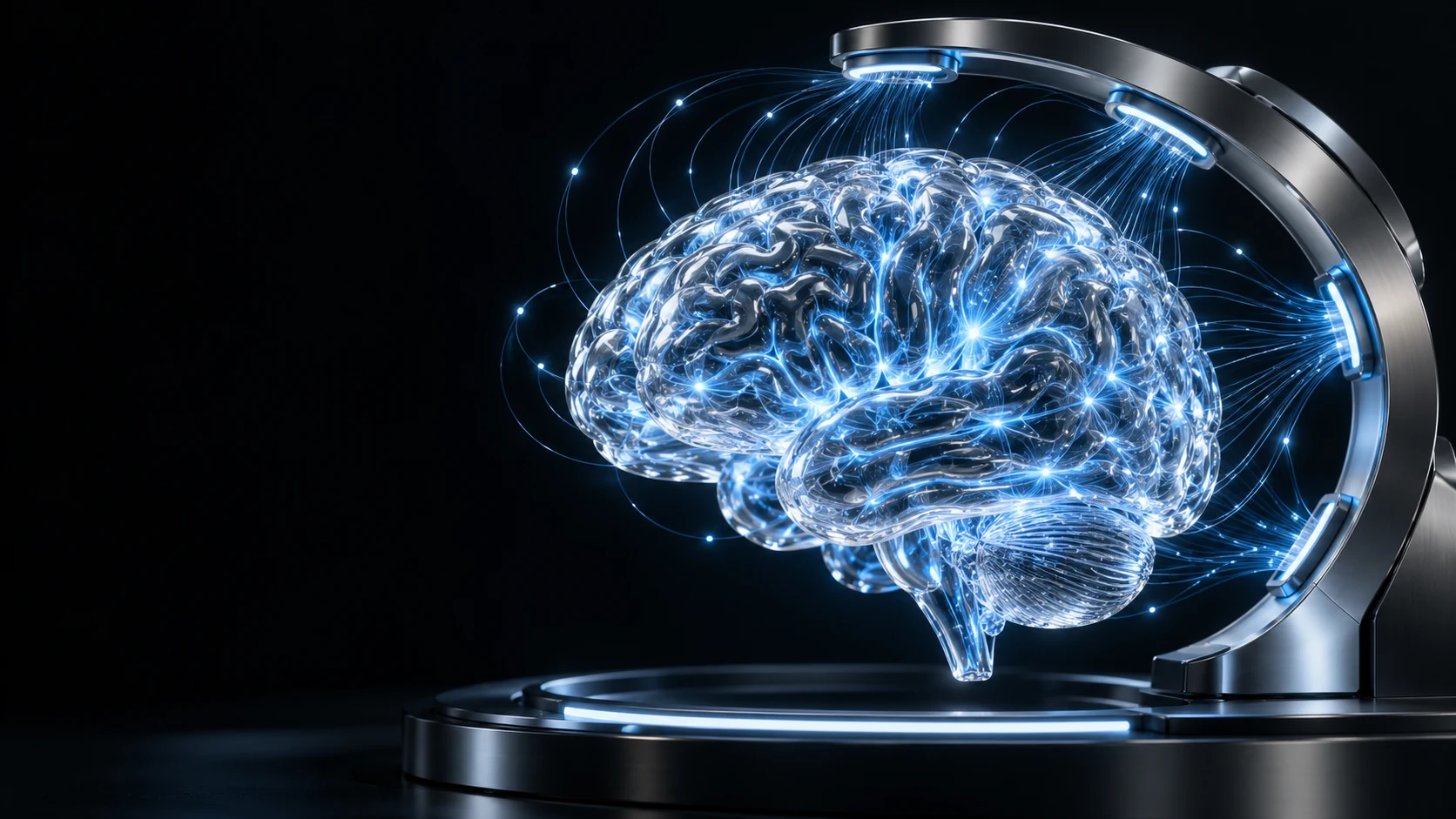
The brain image accompanying this article is AI-generated concept art. It does not document a neural experiment or a device reading hidden information. Saying that next to the image preserves its imaginative purpose while preventing an accidental claim of observation.
Ask which part has been tested
NASA's technology-readiness framework distinguishes stages from basic principles through increasingly developed and demonstrated technology. That separation is useful context for reading engineering claims. A component test and an operational system are different achievements, even when both belong to the same long-term project.
We are not assigning an official NASA readiness rating to Super GNR's proposals. The editorial lesson is narrower: identify the tested component, the conditions and the result. Then identify which connections in the larger imagined system still depend on assumptions.
Keep sources attached to their claims
A book can establish what its author proposes. A research paper can support the result reported in that paper. Neither automatically establishes every future application placed beside it. A source note should explain the connection in a sentence short enough for a reader to check.
Super GNR's hypothetical space agencies need the same care. They are hypothesized possibilities, not confirmed real organizations. Their existence is unestablished here; their images and announcements are imaginative depictions. An agency name, a detailed mandate or a convincing bulletin does not supply evidence that the institution operates.
Leave room for a correction
A strong research note makes revision possible. Record the date, the specific claim and the observation that would change the interpretation. When a model fails or a source proves narrower than expected, update the claim rather than quietly removing the inconvenient condition.
This approach gives ambitious thinking somewhere useful to go. The question can become sharper; the design can become more limited and more informative. The magazine's purpose is to develop that conversation with original explanations and explicit boundaries, so a reader can enjoy the imagined future and inspect the reasoning that accompanies it.
Sources & further reading
Sources support the specific background described below. They do not independently validate Super GNR’s proposed technologies.
- NASA: Technology readiness levels (opens in a new tab)
Supports the distinction between stages of technology maturity. No NASA assessment or endorsement of Super GNR is implied.
- Super GNR: Research disclaimer (opens in a new tab)
The project's own statement of scope and evidence boundaries; this is editorial context, not independent validation of its proposed technologies.