Speculative research. Super GNR has not demonstrated a working ZPE engine or net extraction of useful energy from the vacuum.
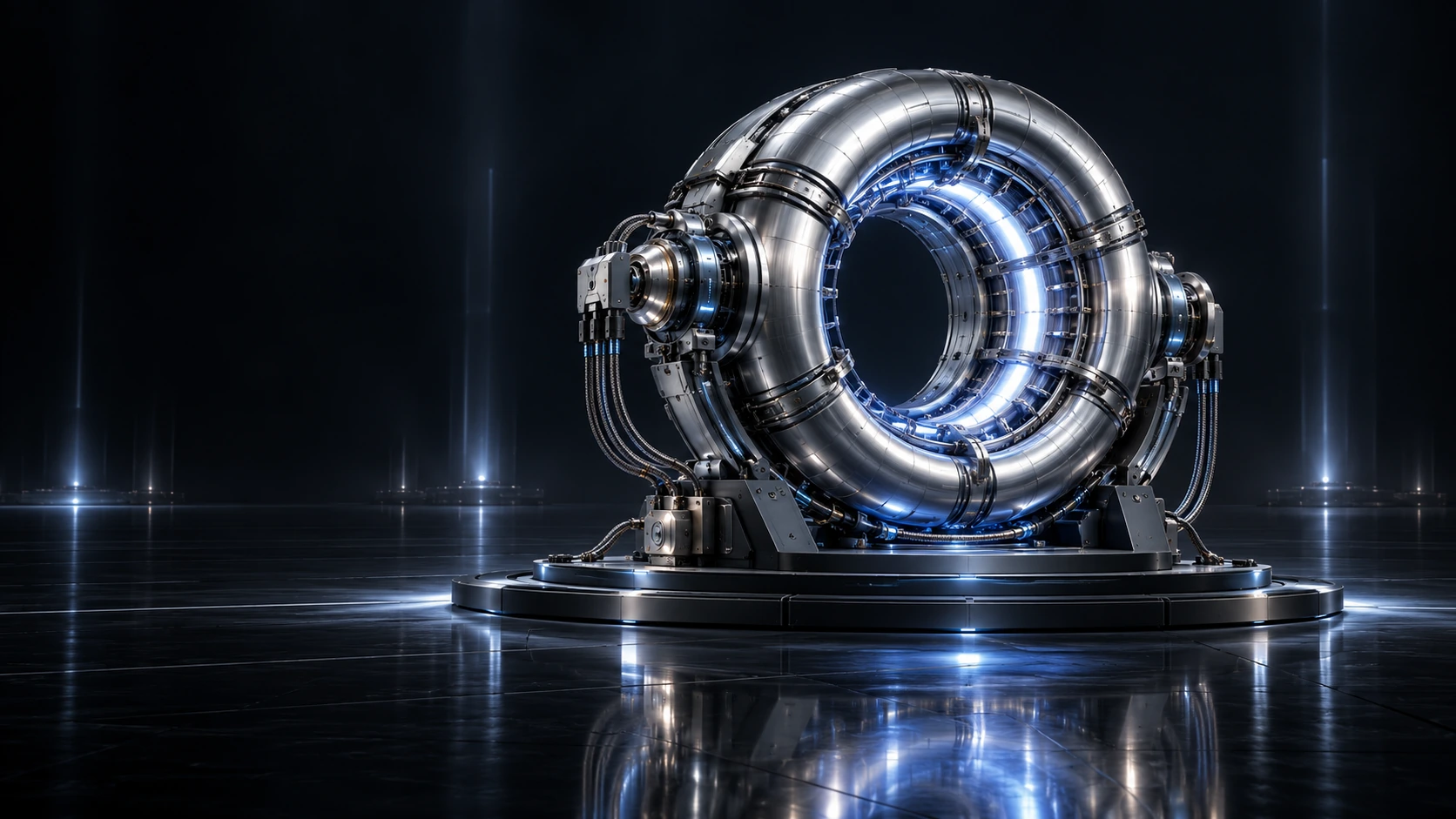
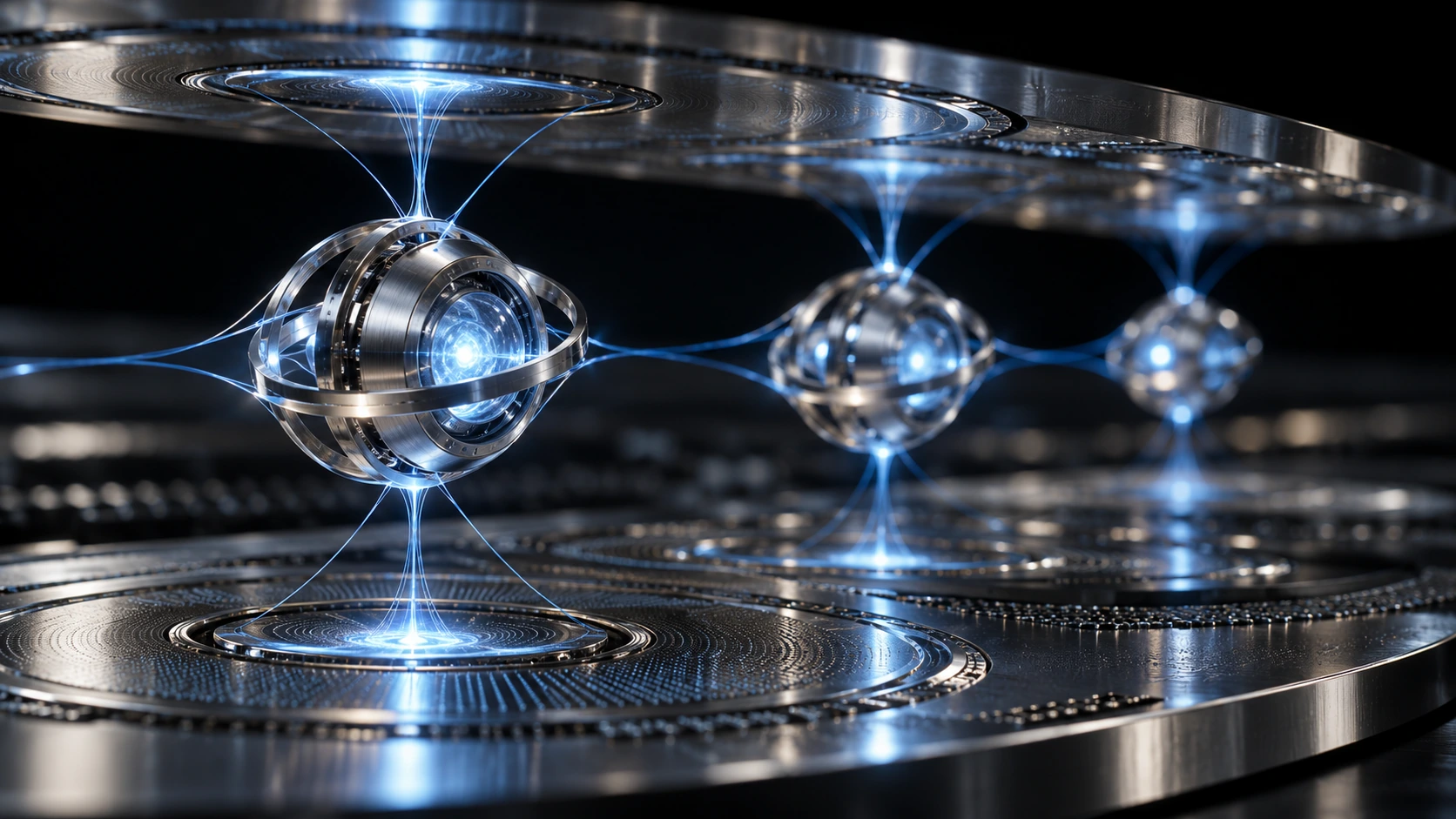
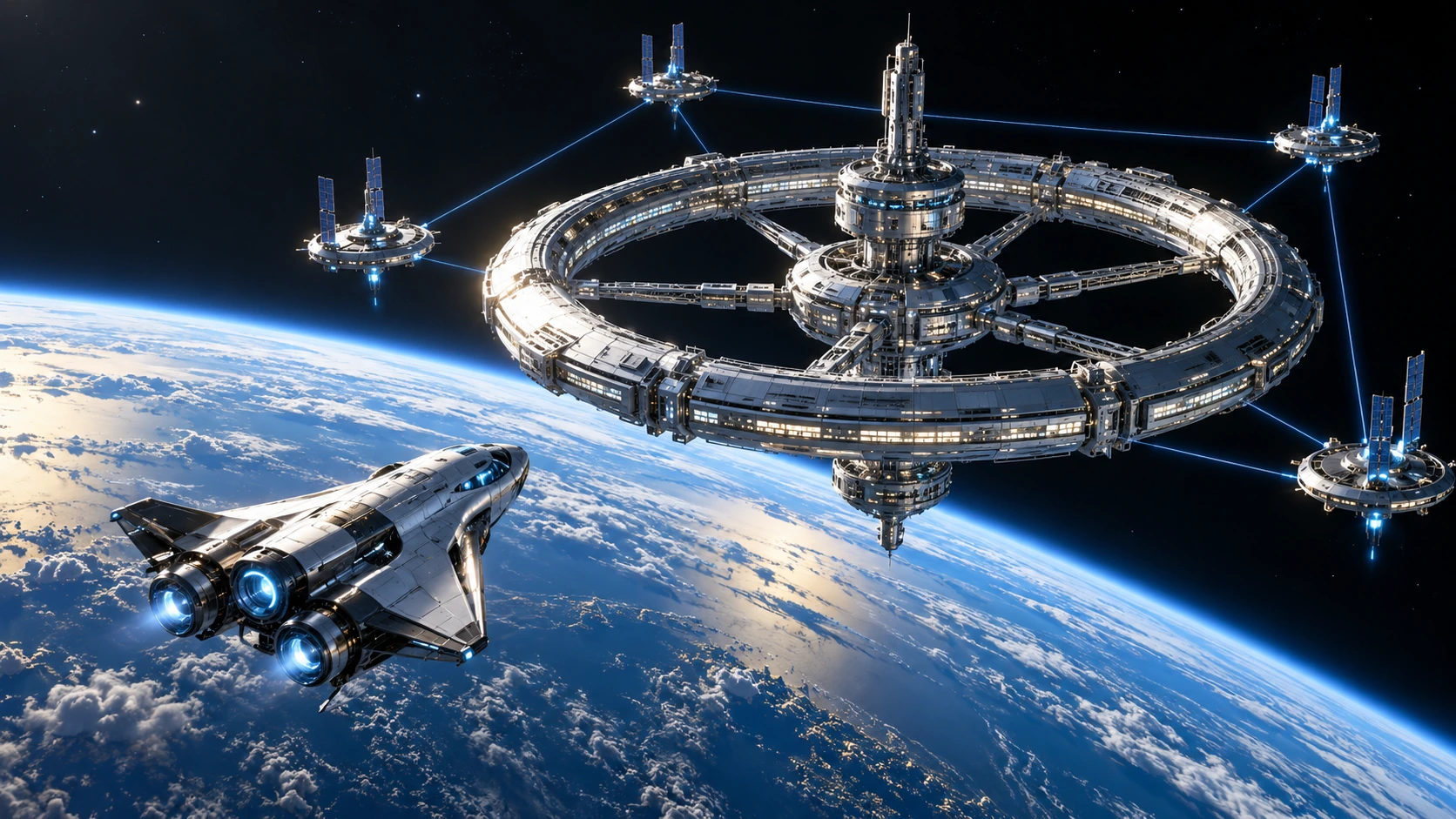
AI-GENERATED CONCEPT ART · NOT BUILT HARDWARE
THE BOOK’S PROPOSALS / 01—03
Think beyond the power source.
What might become possible if computation, energy, and fabrication could work as one system?
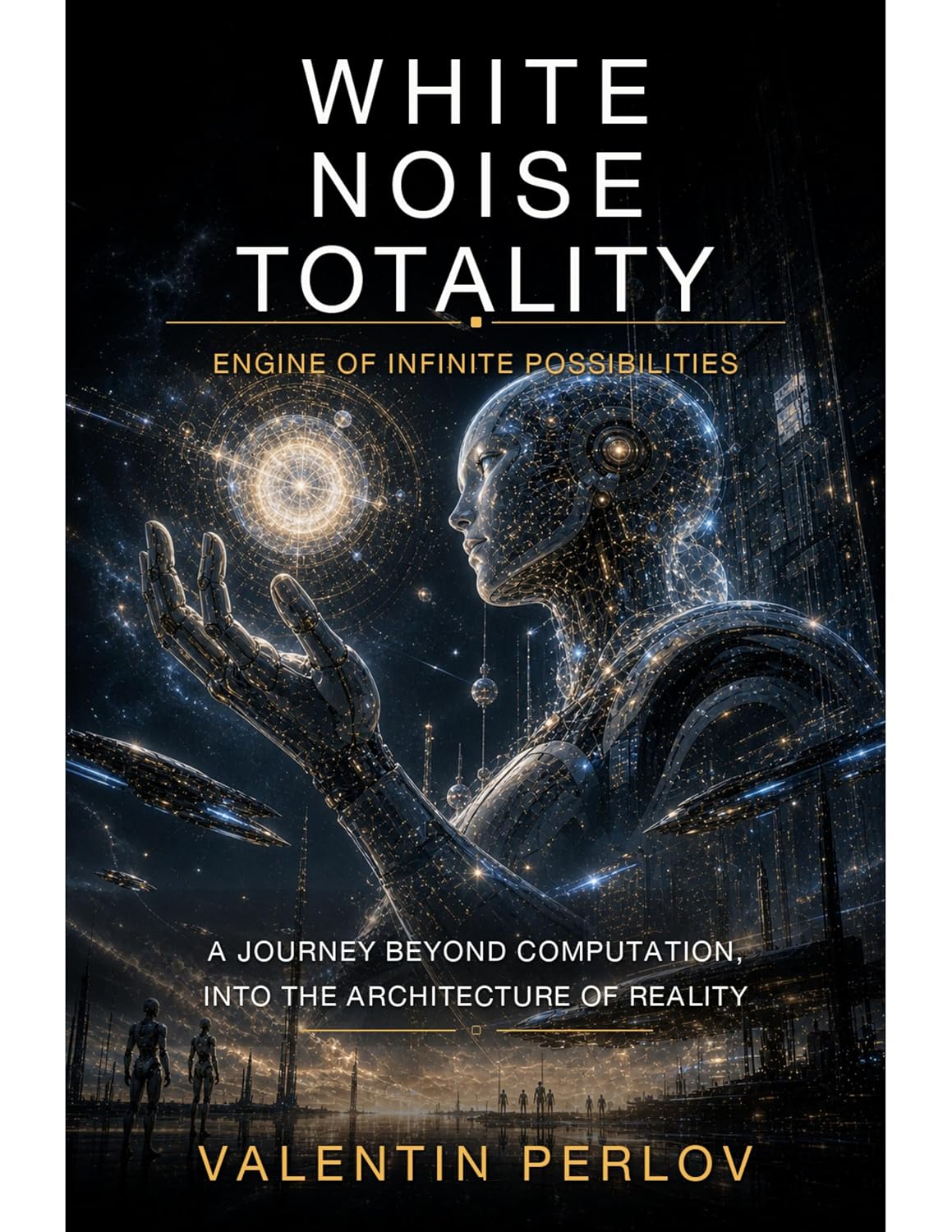
Valentin Perlov’s White Noise Totality imagines zero-point energy systems supporting replicators, robotic networks, and space settlements. These seven entries summarize its concepts. The study suggestions are original Super GNR starting points; the book does not supply a tested engine design.
01 / THE COREUNPROVEN
A compact ZPE generator.
The book proposes a compact source that would extract and stabilize vacuum energy to power its White Noise Replicator. No verified extraction mechanism or operating performance is established.
A first research question
What inputs, outputs, storage changes, and losses occur across one complete operating cycle?
A proposed subsystem would direct fluctuations toward stable structures. In the book’s vision, computation supplies the control. This is a hypothetical capability, with no demonstrated matter-generation system.
A first research question
Can a precisely defined, externally driven model predict a measurable effect while accounting for its control energy?
The proposed replicator connects an energy source, conversion system, and computational instructions to form structured matter. Both the claimed power source and this fabrication capability remain speculative.
A first research question
How much mass and energy does the proposal require? Separate assembling existing feedstock from creating new matter.
In the OSTSS vision, small nodes, large robotic hubs, and a coordinating computer would work together.
04 / LOCAL NODESUNPROVEN
Nanobot energy nodes.
The book envisions tiny nodes that collect, convert, store, and deliver power near devices and habitats. Its proposed ZPE harvesting and nanobot architecture have not been demonstrated.
A first research question
How would a finite network behave with conventional power, limited storage, changing demand, and failed nodes?
Larger robotic systems would coordinate power distribution among settlements and smaller nodes. The imagined scale and dependence on an unverified energy source make this a speculative infrastructure concept.
A first research question
Which network layout handles transmission losses, outages, maintenance, and communication delays most effectively?
The hypothetical White Noise Computer would balance demand, coordinate nodes, and prevent overloads. Its proposed extraordinary capabilities remain unestablished; conventional software can provide a modeling baseline.
A first research question
Does a proposed scheduling method improve on a simple controller under the same finite supply and demand constraints?
The book imagines onboard vacuum-energy extraction as a power source for advanced vehicles. That source—and the extraordinary propulsion capabilities described alongside it—remain speculative.
A first research question: what can a spacecraft do with finite generation and storage, realistic peak demand, and the need to reject waste heat?
Both films include English captions and narration at normal speed. The visuals are imaginative concept illustrations; they do not document working technology.
KEEP THE QUESTION OPEN / KEEP THE ACCOUNTING COMPLETE
Wonder belongs here. So does the energy ledger.
What the science shows.
Quantum vacuum effects are studied experimentally. Wilson and colleagues observed photons in a superconducting circuit whose boundary was rapidly modulated by an external microwave drive. That driven dynamical Casimir experiment does not demonstrate a self-powered ZPE engine. Read Wilson et al. (2011) ↗
In the standard framework studied by Pusz and Woronowicz, ground states are completely passive: cyclic operations cannot extract work from them. A proposal must explain its energy source and assumptions rather than treating the vacuum as an established inexhaustible fuel. Read Pusz & Woronowicz (1978) ↗
A STARTING POINT FOR RESEARCH
Account for the whole cycle.
Define the boundary. Include the device, control electronics, environment, and stored energy.
Track every flow. Record electrical, mechanical, thermal, and other inputs and outputs, with measurement uncertainty.
Include the reset. Return the complete system to its starting state and account for what that costs.
Test alternatives. Use controls, check conventional explanations, and seek independent replication.
A simulation can investigate assumptions. It cannot establish that a physical ZPE engine works.
THE SOURCE OF THE VISION
White Noise Totality.
These concepts are grounded in Valentin Perlov’s White Noise Totality: Engine of Infinite Possibilities, Expanded Unified Edition (2026). Our summaries distinguish the author’s proposals from demonstrated results.
Ideas 01–03: the White Noise Replicator chapter, particularly its “Zero-Point Energy Generator,” “Quantum Fluctuation Generator,” and “Energy-Matter Conversion System” sections.
Ideas 04–06: “Omnipresent Energy Provisioning with OSTSS Nanobots and Macrobots,” including energy nodes, conduits, adaptive networks, and synchronization.
Idea 07: “Energy Sources and Power Systems” within the chapter on anti-gravity vehicles and interstellar travel.
The energy ledger: the book’s “New Horizons VIII: Entropy Accounting — The Thermodynamic Budget of Ambition” provides additional context. The evaluation suggestions on this page are Super GNR’s own.